For surface-treatment companies and manufacturers planning their next plating line, corrosion performance, production cost and the ability to qualify customers’ parts belong in the same investment decision.
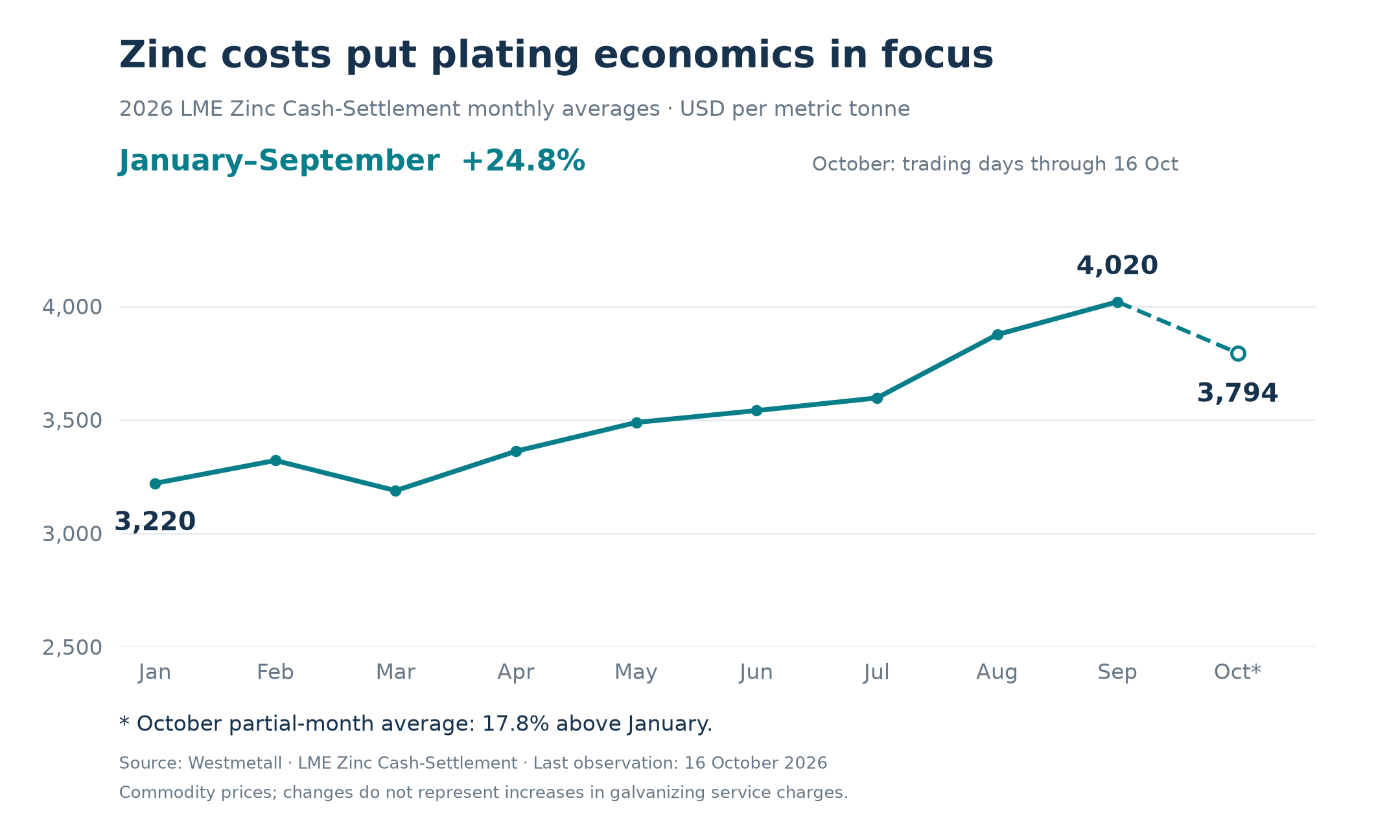
Zinc prices have risen sharply in 2026. The monthly average LME Zinc Cash-Settlement price increased from US$3,220 per metric tonne in January to US$4,020 in September, a rise of 24.8%. The October average through the 16th eased to US$3,794, still 17.8% above January. Westmetall monthly price data
For a galvanizer, higher zinc prices put more pressure on material consumption and working capital. Manufacturers feel that pressure through the cost of coated components. At the same time, corrosion requirements, thread tolerances and delivery specifications still have to be met.
That makes this a useful point to review the process behind the coating. How much material is deposited on each part? What energy does the line consume? How much inspection, rework and finishing is required before the product can be shipped?
KEMP offers Innozinc technology licensing and dedicated plating equipment for companies developing local production. The opportunity is to add a ceramic zinc plating process to the manufacturing capabilities available in your market, with part qualification and production economics assessed together.
Start with the parts your customers need
Fasteners, threaded rods, pipe fittings and fabricated steel components place different demands on a coating line. A bolt must pass thread gauging and assemble correctly after plating. A grooved pipe connection must retain coating integrity where the metal is formed. A bracket needs protection at bends and connection points as well as on its flat surfaces.
These requirements define the commercial case for a new line. A surface-treatment company can evaluate Innozinc against the parts and specifications its customers already purchase. A manufacturer considering in-house plating can examine how the process fits between fabrication, inspection and final assembly.
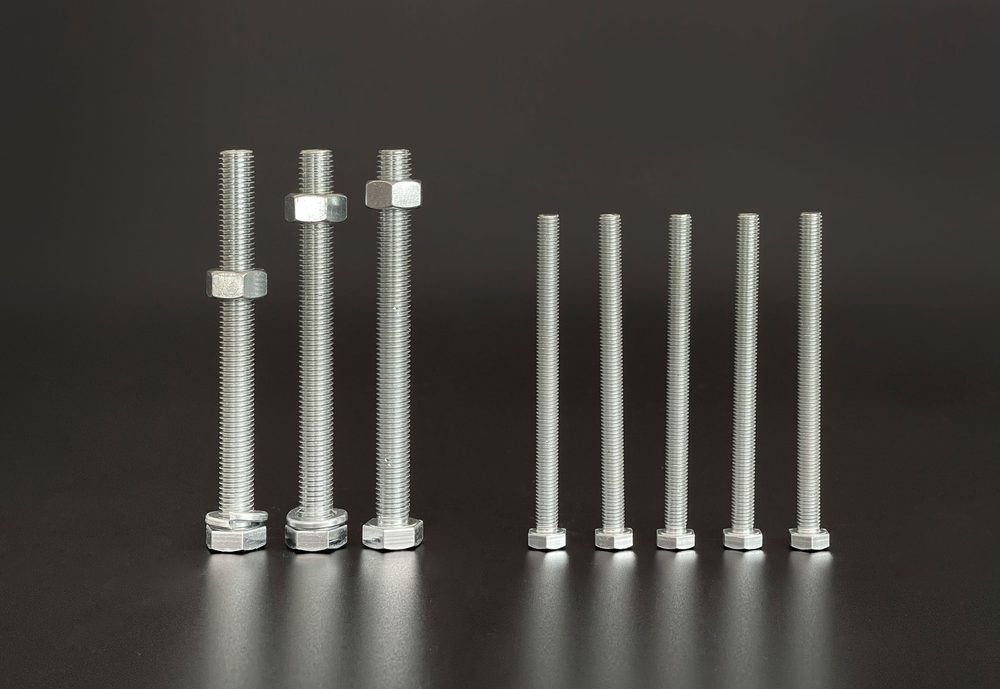
Innozinc combines an electrodeposited zinc layer with an inorganic ceramic film. Zinc provides sacrificial protection, while the ceramic film forms a barrier to corrosive substances. This composite structure allows corrosion resistance and coating thickness to be considered together. Its thin coating also supports applications involving thread engagement, bending and groove forming. Coating structure and fabrication characteristics
The product range distinguishes Innozinc at 720–1,000 hours of salt spray performance and Innozinc-h at 1,500–2,000 hours. These are product specification ranges; the selected part specification defines thickness, preparation and white- and red-rust acceptance criteria. For a prospective line operator, this provides a basis for selecting the grade against each customer’s corrosion requirement. Innozinc-h specifications and test methods
Assembly damage is another practical consideration. In KEMP’s 2019 internal evaluation, mechanically damaged Innozinc fastener specimens with an 8 μm coating showed no red rust after 480 hours of neutral salt spray exposure. The test used ASTM B117 / KS D 9502 conditions, with 5% sodium chloride at 35°C. Evaluating the coating after mechanical damage connects the corrosion test to the contact a fastener experiences during assembly. Fastener evaluation and production information
Connect technical performance to the purchasing specification
A coating becomes commercially useful when it can be accepted on a customer’s drawing and inspection plan. KEMP has worked to broaden the standards pathways for ceramic zinc plating in Korea. The October 2023 revision to KS D 3507 revised the note for the -ZN coating designation from “hot-dip zinc coating” to “zinc coating” to accommodate zinc electroplating. The May 2024 revision to KS B 1543, for steel butt-welding pipe fittings, addressed the addition of zinc electroplating. KS D 3507 revision history · KS B 1543 revision history
For an overseas project, the same work begins with the applicable local standard and the purchaser’s coating specification. Identify the required corrosion test, thickness, dimensional limits and fabrication sequence, then qualify the coating on the intended component. The Korean revisions provide experience in bringing an alternative process into product specifications; acceptance in each export market follows that market’s requirements.
Production experience in Ulsan, a completed facility in China
KEMP carries out Innozinc contract plating at its own factory in Ulsan, South Korea. Its rack and barrel lines provide a practical reference for part handling, process control and production inspection. KEMP factory and component processing
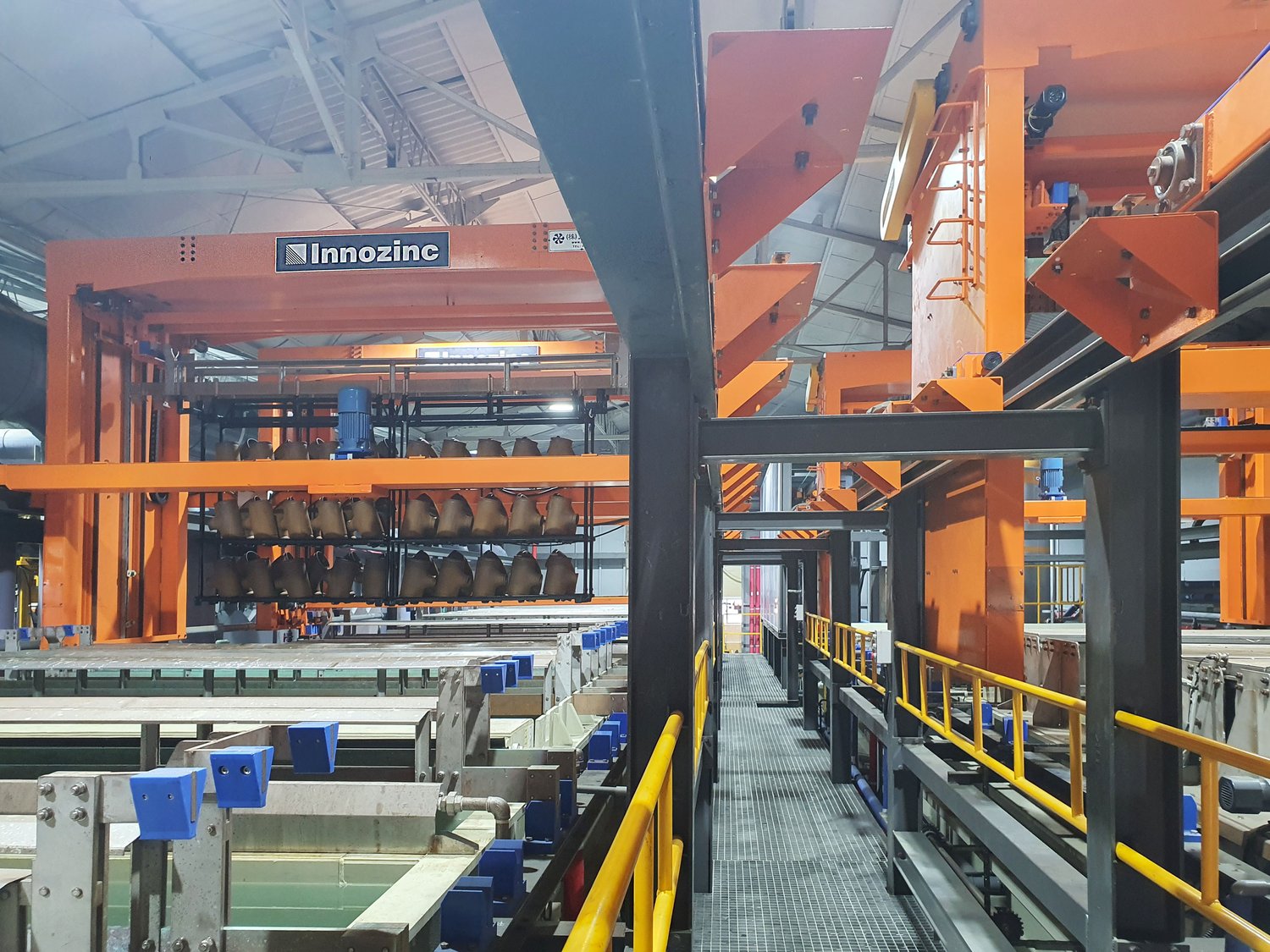
An overseas Innozinc facility has been completed in China. Discussions are also underway for equipment fabrication for a project in Vietnam.
For companies in other markets, the proposed route is local production through licensing and equipment introduction. The Ulsan factory provides a production reference for planning the process and evaluating components before a local line is introduced.
Choose the line around geometry and throughput
Rack plating holds components on fixtures through the treatment sequence. It is relevant where part dimensions, surface contact and handling need individual control. Barrel plating processes batches of small components in rotating barrels. The choice begins with the product mix, loading method and required output.
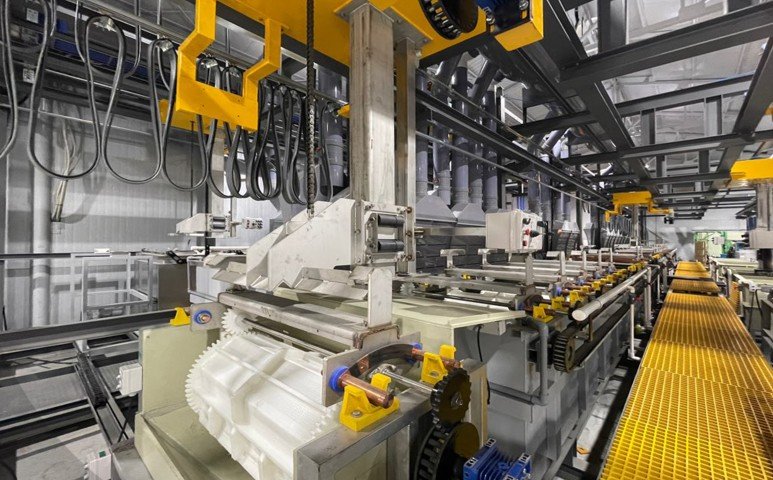
Innozinc licensing brings together dedicated equipment, process chemicals and KEMP’s operating and quality requirements. Line configuration takes account of part size, geometry and throughput. KEMP supports commissioning and process stabilization through bath analysis, parameter adjustment and initial quality evaluation. Ongoing chemical analysis and operating data support quality control. The implementation scope is agreed against the proposed products, production plan and the operator’s process-management capabilities. Innozinc equipment, licensing and technical support
Build the investment case per accepted part
For a local producer, economic evaluation starts with the cost of a component that passes inspection and is ready for delivery. Equipment price, coating thickness and chemical consumption each tell only part of that story. A useful comparison includes the following:
Material and energy. Zinc and process-chemical consumption, electricity, fuel, water and treatment costs for the same component and output.
Quality and finishing. First-pass yield, thread reworking, correction, reinspection, coating repair and scrap.
Line utilization. Product mix, rack or barrel loading, operating hours, maintenance and the volume available to keep the line productive.
Investment and supply. Equipment, site preparation, utilities, environmental facilities, licensing terms, chemical supply and local delivery costs.
Innozinc’s thin composite coating creates a route to reducing the amount of zinc deposited on a part while meeting its corrosion specification. Its room-temperature electrodeposition stage also removes the need for a molten-zinc bath in that stage of production. A complete line assessment includes pretreatment, electrical power, drying and other utilities. These are the places to measure the economic effect at the proposed site. Dedicated line operating concept
Dimensional control can be just as important as material cost. If a qualified coating specification reduces thread reworking or local repairs, those changes belong in the cost comparison. For an in-house line, evaluate the effect on work-in-progress, transport and production scheduling. For a contract plater, evaluate the expected customer mix and achievable throughput alongside the investment.
The same measurements support environmental assessment. Record zinc input, electricity, fuel, water and process waste against accepted output. This links resource use to the production result and provides a basis for assessing environmental improvements with local energy and treatment conditions.
Plan the line from a qualified component
A practical entry point is a defined family of parts with known demand. First establish the material, geometry, corrosion requirement and assembly or forming operations. Sample evaluation can then address coating integrity, appearance, dimensions and corrosion performance together. KEMP’s sample and production review process supports that component-level assessment.
Once the required coating and inspection criteria are established, the equipment discussion can focus on product dimensions, loading density, output and site conditions. The resulting proposal should connect the qualification work to a production plan and a cost model for the intended location.
For a licensing or equipment discussion, send:
- Production country and proposed site, including existing surface-treatment operations.
- Target parts, photographs or drawings, material grades, dimensions and weights.
- Current coating, applicable standards, required corrosion tests and subsequent fabrication or assembly.
- Monthly volume, batch sizes, product mix and the operating schedule being considered.
- The main commercial objective: supplying local customers, bringing coating in-house or expanding into new component specifications.
Discuss Innozinc licensing and equipment for your production site.
KEMP can review the target components and production requirements with you, then define the scope for process qualification and a dedicated Innozinc line.
info@kempkorea.com · +82-52-289-1155
KEMP Co., Ltd. · Ulsan, Republic of Korea


답글 남기기