Before increasing zinc thickness or changing equipment, consider what post-treatment can do for corrosion resistance.
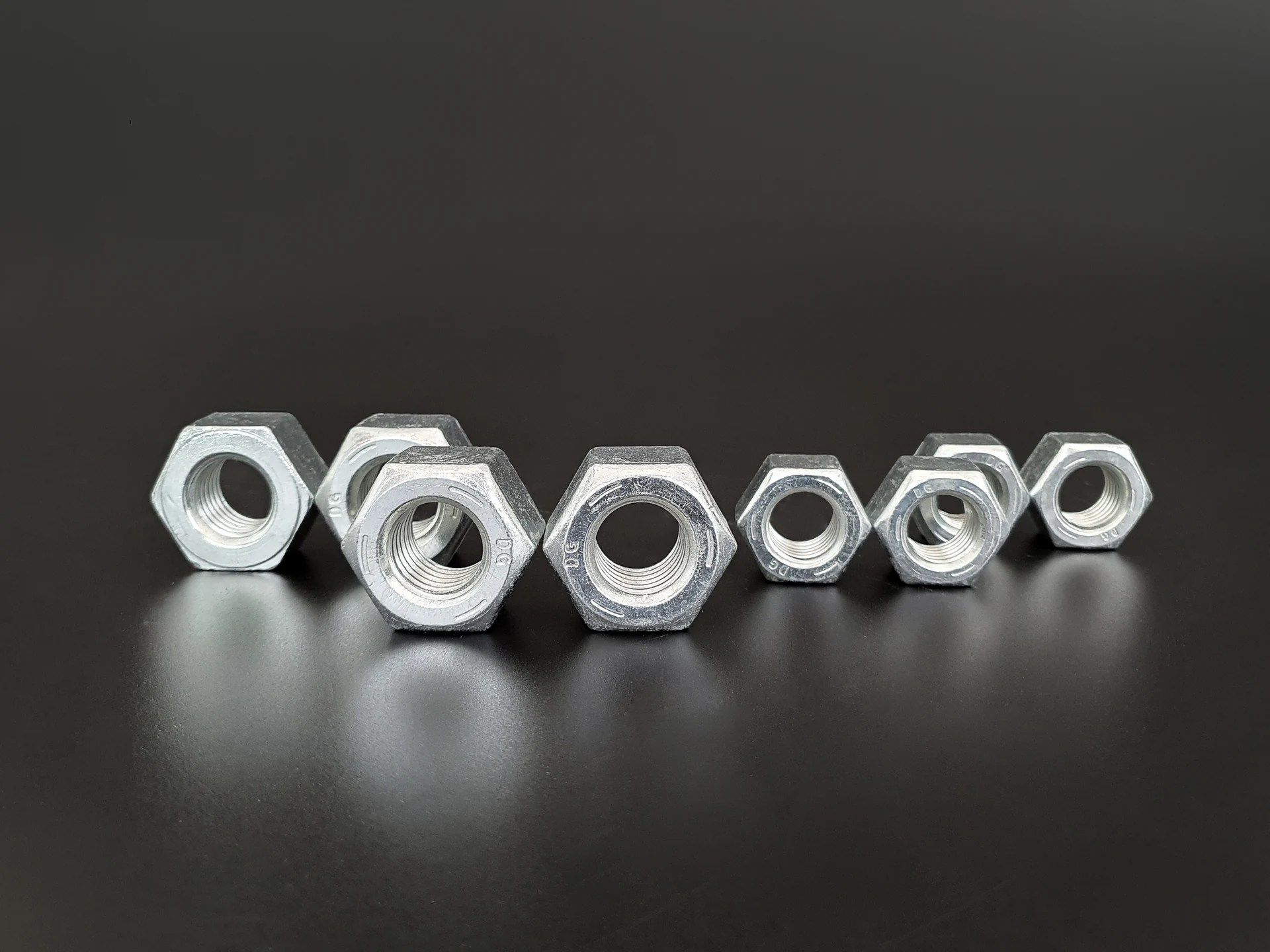
Corrosion resistance is only one consideration when specifying the surface treatment of bolts, nuts, washers and brackets. Parts must meet dimensional and fastening requirements after plating, while satisfying the customer’s corrosion-test criteria within the production budget. Thicker zinc deposits consume more zinc and take longer to produce. Changing the plating method requires a fresh review of equipment and process conditions.
KEMP’s ELPANG is a sealer system that improves post-treatment performance while using existing zinc electroplating equipment. A pre-sealer and main sealer protect the zinc surface after trivalent chromate passivation. It gives platers and component manufacturers a way to evaluate higher corrosion performance while making better use of their current lines.
A growing fastener market brings greater quality demands
The global industrial fasteners market is projected to grow from USD 90.57 billion in 2025 to USD 104.12 billion in 2029, at a compound annual growth rate of 3.5%. Automotive was the largest end-use segment in 2024. Component suppliers must meet this demand while managing delivery specifications, productivity and process costs. MarketsandMarkets forecast
Automotive components also face requirements for hazardous-substance control. Hyundai Motor and Kia’s 2025 guide to hazardous-substance specifications for parts and materials addresses restrictions on hexavalent chromium. Surface-treatment specifications use combinations of trivalent chromate passivation and sealers to achieve corrosion resistance while addressing such requirements. Hyundai Motor and Kia specification guide
Kalmar’s KGS 50523, for example, specifies a minimum zinc thickness of 8 μm for zinc plating with thick-film passivation and sealer. Its salt-spray test route sets criteria of 120 hours for white rust and 240 hours for base-metal corrosion. What the customer controls is the performance of the complete coating specification, combining the zinc deposit and post-treatment, rather than thickness alone. KGS 50523
Why zinc thickness and post-treatment should be specified together
The zinc layer provides the foundation for protecting the steel substrate. For threaded parts and mating surfaces, increasing thickness also requires checking the available dimensional allowance. At the same current density and current efficiency, the required plating time is proportional to thickness. A thicker deposit therefore affects zinc consumption and line throughput.
The sealer helps restrict the ingress of corrosive species through the surface of this underlying deposit. To meet a corrosion target, it makes sense to assess zinc thickness and uniformity, passivation quality and sealer protection together.
After changing a sealer, fasteners still need gauge checks and evaluation of their coefficient of friction and fastening characteristics. The customer’s minimum zinc thickness remains applicable; any proposed thickness change goes through component testing and specification approval. ELPANG is introduced to improve post-treatment performance within these quality requirements.
Where ELPANG fits into an existing line
The existing plating and chromate-passivation equipment is retained, with the chemicals applied in the subsequent rinse and sealer stages. Alkaline zinc plating lines also use the AKL plating-bath additive.
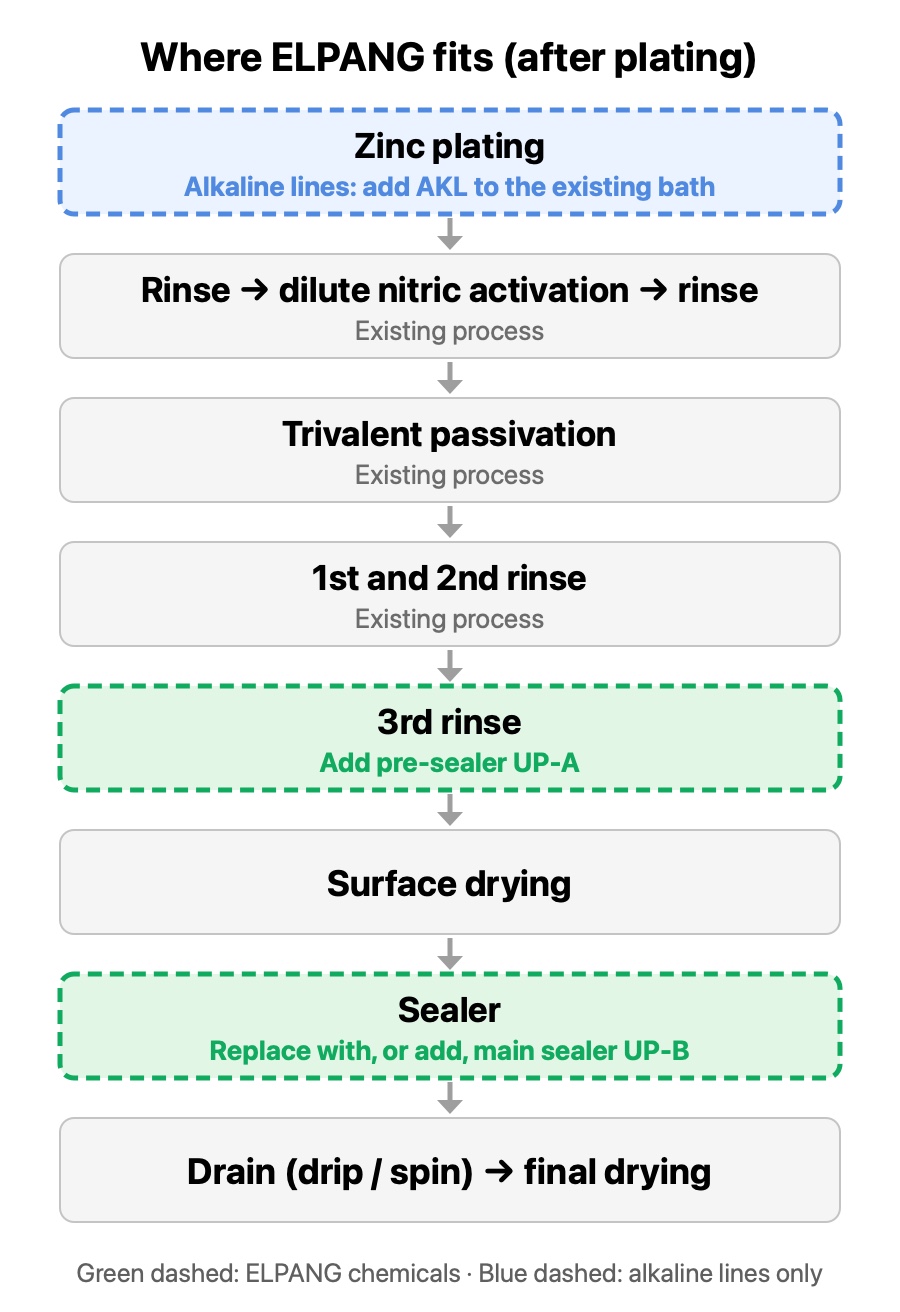
UP-A pre-sealer is applied in the third rinse tank after trivalent chromate passivation. UP-B main sealer replaces the existing sealer or is introduced as a new sealer stage. Excess liquid removal and drying then form the protective film.
For example, the Upgrade 500 acid-line catalog specifies concentrate-to-water dilution ratios of 1:100 for the pre-sealer, 1:10 for the rack-process main sealer and 1:5–7 for the barrel-process main sealer. Chemical combinations and ratios depend on the grade and treatment method, so operating conditions are set using the current technical data sheet (TDS) for the selected product. Upgrade 500 acid-line catalog
To use existing equipment, first review the rinse tanks, sealer tank, liquid-removal equipment and drying equipment downstream of passivation. The rinse tank containing the pre-sealer needs separate management, with control of contamination carried over from the preceding stage and chemical drag-out. Lines without a sealer tank or drying equipment require an assessment of the additions needed in those stages.
Dilution and application in practice
The video shows the chemicals being diluted in water, stirred and applied to metal specimens. ELPANG focuses on setting the post-treatment conditions while maintaining the quality of the underlying zinc plating, instead of converting the entire plating bath to a different process.
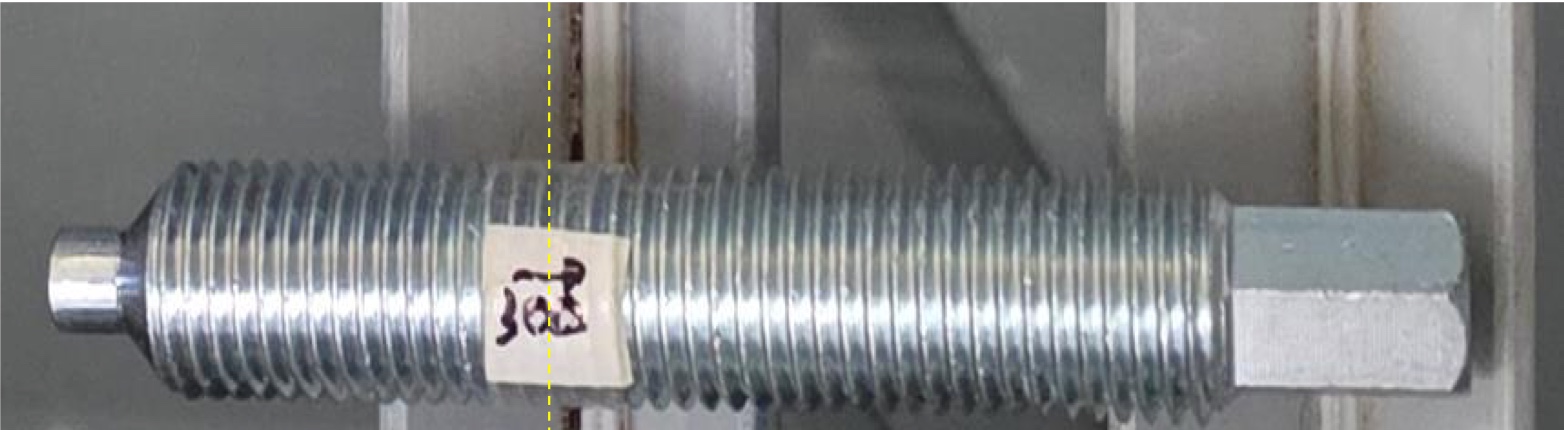
ELPANG forms an inorganic film while retaining the appearance of the existing zinc electroplating. In the photograph below, taken before testing, there is little color difference between the treated section and the original section.
Corrosion reference values compared with existing sealer specifications
ELPANG Upgrade 300 and 500 show improved corrosion reference values at lower zinc-thickness ranges than the existing sealer specifications shown below. These figures are selected from the comparisons published on KEMP’s website.
| Grade | Existing specification | With ELPANG |
|---|---|---|
| Upgrade 100 | Approx. 1 μm; no sealer White rust: 5 h / Red rust: 24 h |
Approx. 1 μm White rust: 15 h / Red rust: 96 h |
| Upgrade 300 | 5–6 μm; with sealer White rust: 48 h / Red rust: 120 h |
3–4 μm White rust: 72 h / Red rust: 240 h |
| Upgrade 500 | 6–8 μm; with sealer White rust: 72 h / Red rust: 240 h |
3–5 μm White rust: 72–96 h / Red rust: 300 h |
| Upgrade 500 | 8–10 μm; with sealer White rust: 72 h / Red rust: 240 h |
6–8 μm White rust: 72–120 h / Red rust: 400 h |
These are KEMP’s published reference values; zinc-thickness conditions differ across the comparisons. They are not results from an identical-condition test against a specified competing sealer, or estimates of service life. Full comparison and application scope
For Upgrade 300, the existing specification with sealer shows a red-rust value of 120 hours at 5–6 μm, compared with 240 hours at 3–4 μm for ELPANG. For Upgrade 500, the existing 6–8 μm specification shows 240 hours, while ELPANG gives a reference value of 300 hours at 3–5 μm.
For a customer, these figures provide a reason to investigate whether a change in post-treatment can create additional corrosion-performance margin before continuing to increase zinc thickness. An implementation trial compares the current sealer and ELPANG on the same component under the same plating conditions, using the customer’s acceptance criteria.
Different corrosion progression on two sections of the same stud bolt
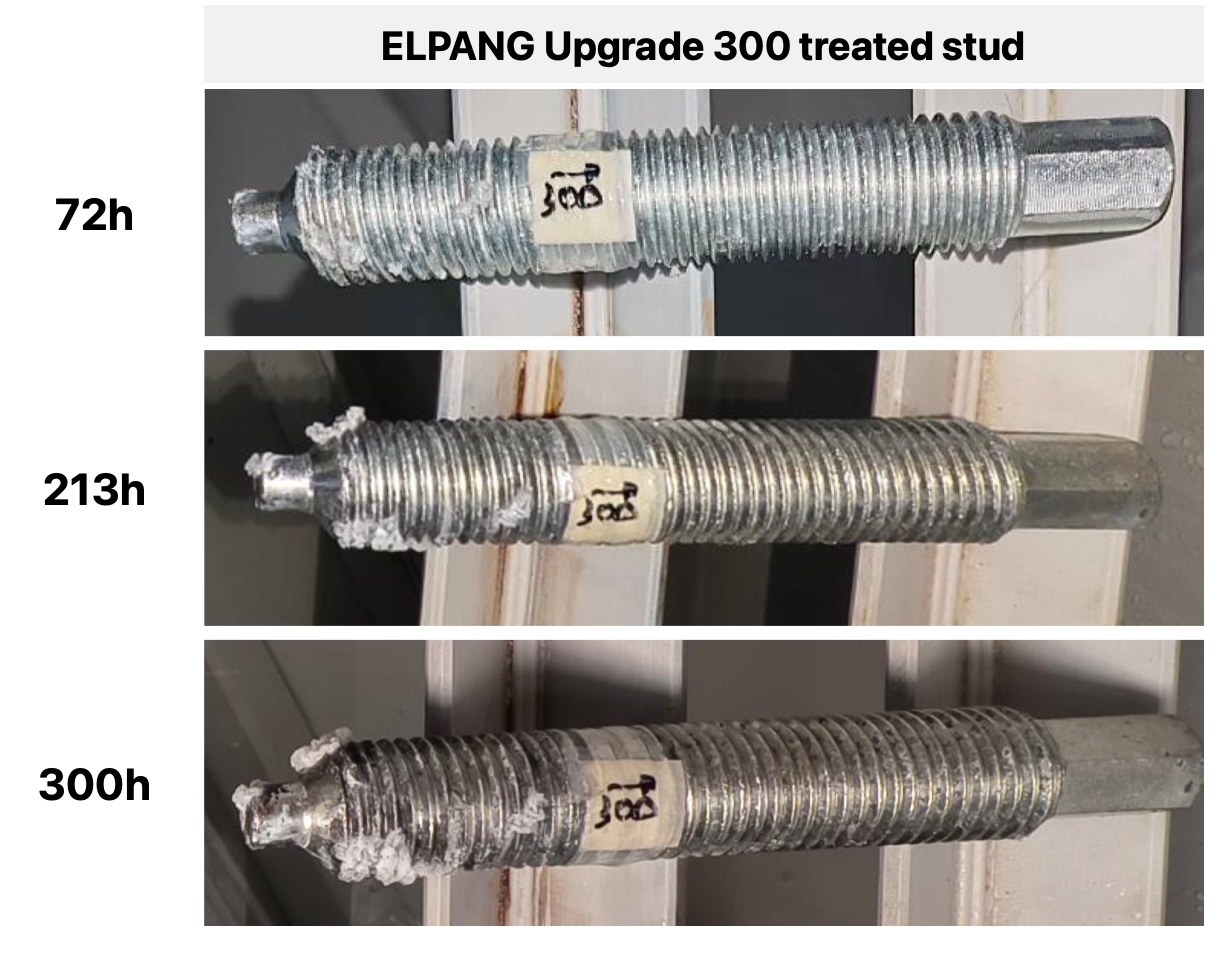
In the stud-bolt tests, ELPANG was applied to one section of each bolt, and changes in appearance were compared with the remaining section of the original zinc electroplating. The specimens had an estimated zinc thickness of 3–5 μm and were observed at 22 time points from 12 to 300 hours.
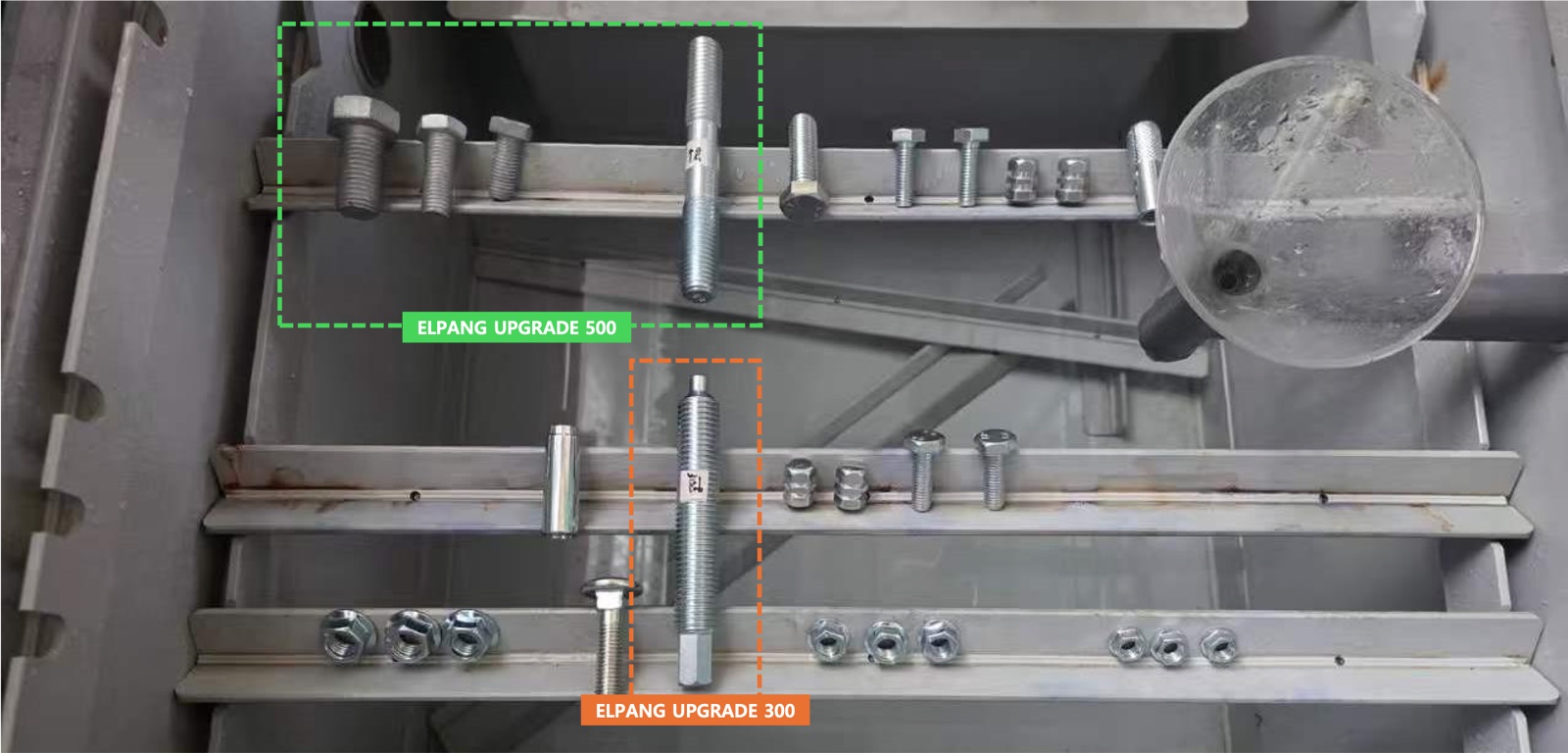
The Upgrade 300 specimen received UP300-A at 1:100, followed by liquid removal and UP300-B at 1:10. The Upgrade 500 specimen received UP500-A at 1:100 and UP500-B at 1:7. Because the initial plating condition differed between the specimens, the results are read as treated-versus-untreated comparisons within each bolt.
Upgrade 300: good oxidation suppression through 250 hours
On the original section, white rust spread after initial black corrosion products appeared. At the 204- and 213-hour observations, white rust had accumulated across that section. The ELPANG-treated section showed good oxidation suppression through 250 hours, with some white rust and discoloration observed at 260 and 274 hours.
Upgrade 500: slower spread of white rust on the treated section
White rust spread substantially across the original section at the 38- and 48-hour observations. The ELPANG-treated section remained in good condition without white rust at 72 hours. Fine black spots were recorded at 110 and 142 hours, followed by some discoloration at 181 and 189 hours. White-rust formation was still limited at the 250-hour observation.
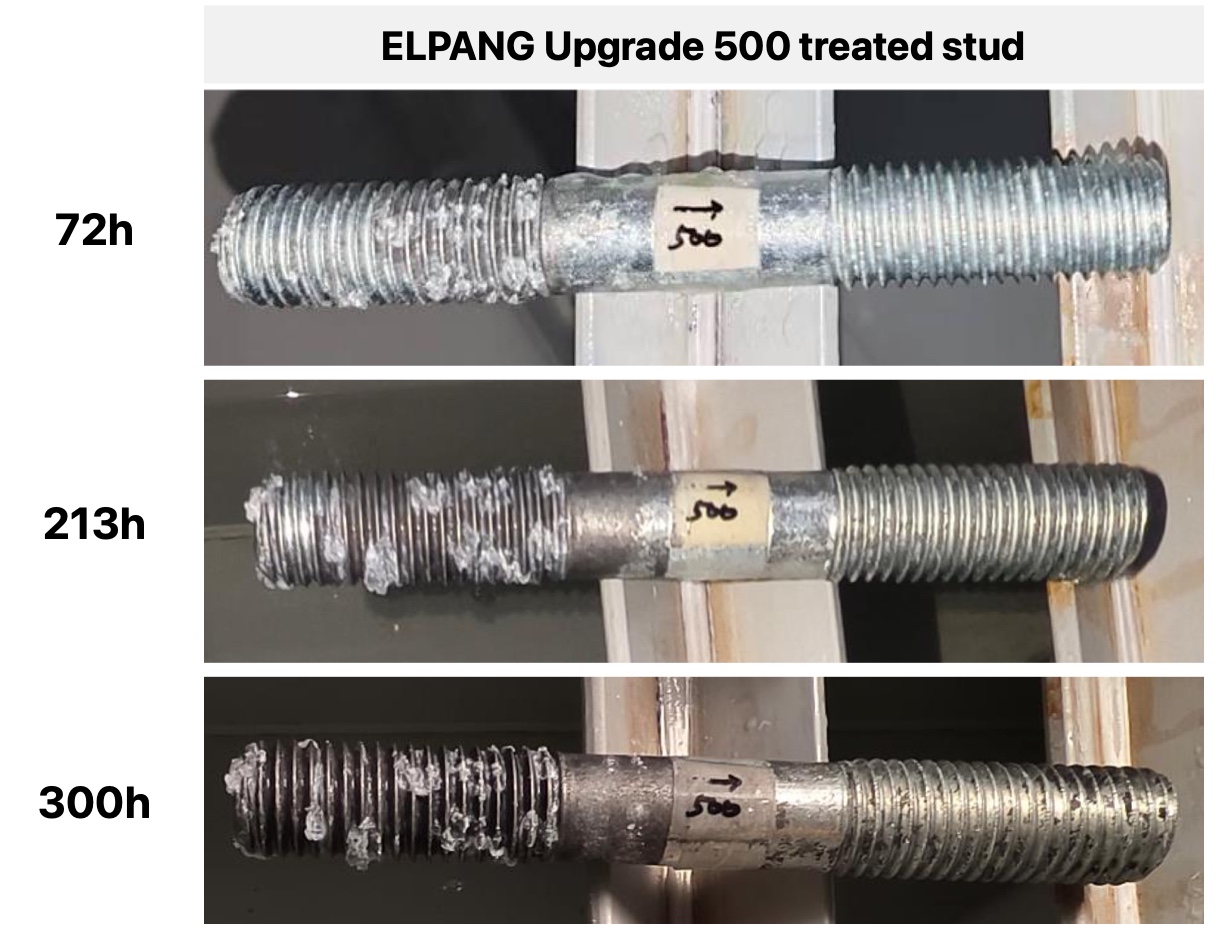
In both specimens, the 300-hour photographs show relatively less accumulation of white corrosion products on the treated sections. These observations compare corrosion progression with sections not treated with ELPANG; they are separate from the website’s sealer-comparison table above. The final photographs demonstrate a delay in the onset and spread of white rust, rather than establishing a 300-hour no-red-rust pass.
Evaluation on thin zinc deposits and a production line
Upgrade 100 is intended for thin zinc electroplating specifications of approximately 1 μm. Its public catalog includes photographs comparing the treated and unsealed sections of a threaded rod before testing and through 96 hours.
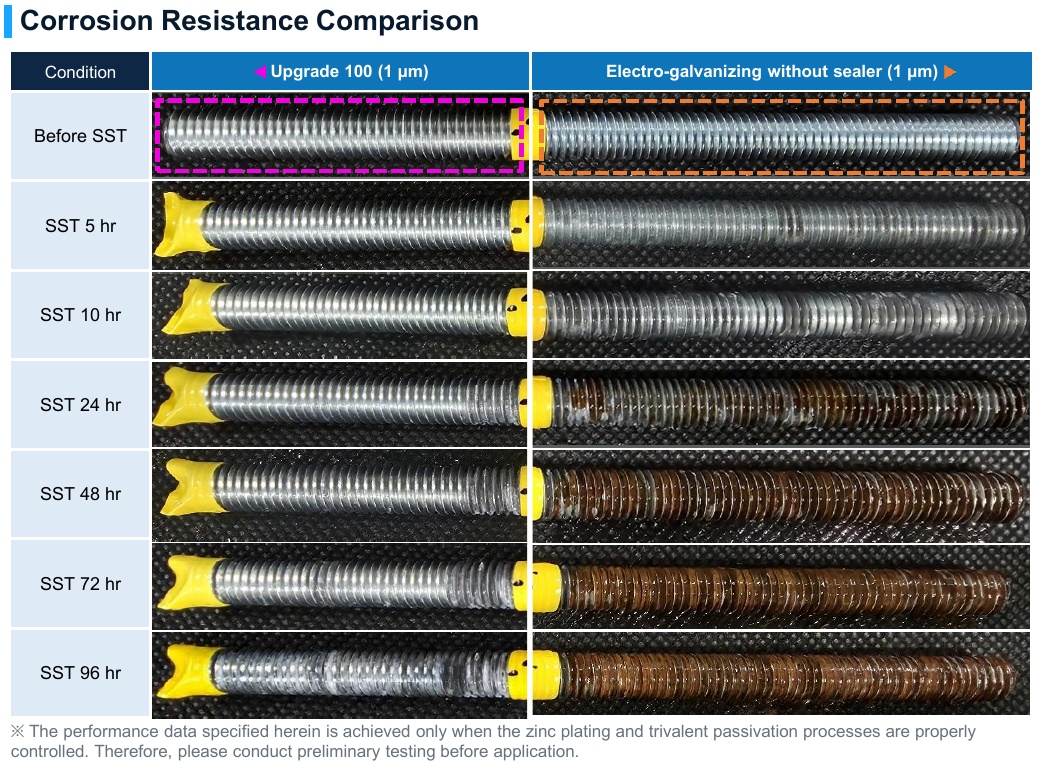
In the photographs, reddish-brown corrosion spreads across the unsealed section over time, while the Upgrade 100 section retains more of its metallic surface appearance. This illustrates the difference that post-treatment can make to the protection provided by a thin zinc deposit. Upgrade 100 public catalog
Separately from this public threaded-rod example, Upgrade 100 main sealer was evaluated on nuts with a zinc thickness of 0.7–1.3 μm on a zinc electroplating production line in China. UP100-B/BW was applied at 1:10, before the introduction of pre-sealer. The treated parts showed good suppression of zinc corrosion at 24 hours, and slower oxidation and red-rust spread than the untreated parts at 96 hours.
The line evaluation also found blackening in damaged areas and areas where concentrated current had produced a rough zinc deposit. This is why underlying plating quality needs to be managed alongside the sealer application. Production control covers the following:
- Zinc thickness and surface condition at different locations on the part
- Barrel loading and uniform chemical contact
- Rinse-water contamination, passivation concentration and sealer concentration
- Liquid removal, drying, replenishment and bath-replacement intervals
Alongside dedicated chemical supply, KEMP offers guidance on an ELPANG operating program for managing process conditions, quality performance and production data.
Assess cost through existing equipment and cost per accepted part
ELPANG’s economic value lies in its potential to limit the investment needed for a process change by using existing plating equipment. The review focuses on post-treatment while retaining the plating bath and pretreatment equipment, so the investment items differ from those involved in changing the plating method.
Chemical purchase price and dilution ratio should be considered together, but the final comparison is the cost of producing one kilogram or one part that meets the target quality. Include the cost of any added pre-sealer, as well as main-sealer bath make-up, replenishment, replacement and drag-out associated with liquid removal.
| Cost category | Items to check |
|---|---|
| Equipment | Extent of reuse of rinse, sealer, liquid-removal and drying equipment; cost of additions |
| Chemicals | Initial A/B chemical charge, replenishment per unit of output and disposal at bath replacement |
| Production | Plating time within customer specifications, throughput and energy use |
| Quality | Sorting, replating, returns and rework caused by white rust |
Sufficient sealer performance may create room to adjust zinc thickness and plating time within the customer’s specification. Tracking any reduction in white-rust-related sorting and rework also reveals economic effects that chemical price alone does not capture.
The ELPANG cost calculator on KEMP’s website can serve as a starting point for comparing chemical consumption costs. It is a reference tool using a China-based price scenario. Actual total cost is calculated from the customer’s chemical usage, labor, energy and production yield.
Connecting performance improvement with resource and energy management
Where a component’s specification permits thickness adjustment, zinc consumption and electrical charge can be compared together. At the same current efficiency and operating conditions, depositing less zinc requires less electrical charge. Recording zinc replenishment and actual electricity use per unit of production makes the change measurable.
If fewer parts need replating because of white-rust defects, the chemicals, electricity and rinse water used for that rework also decrease. The assessment must also account for pre-sealer and main-sealer replenishment and replacement, unrecovered drag-out and drying requirements.
A practical environmental assessment therefore goes beyond stating that the chemicals are water-based. It compares zinc, electricity, chemicals, rinse water and wastewater-treatment quantities before and after implementation, normalized to accepted output. The same data can support the performance and cost evaluation.
Evaluating ELPANG for your components
Design engineers can assess whether corrosion specifications can be improved while maintaining zinc-thickness and dimensional requirements. Quality engineers check fastening behavior, appearance and variation across repeat production, alongside white- and red-rust criteria. Purchasing teams can review a post-treatment change with their existing plating supplier and compare processing costs per accepted part.
Start with the current specification:
- Review the process — Identify the acid or alkaline bath, rack or barrel method, zinc thickness, passivation and sealer, and the rinse, liquid-removal and drying equipment.
- Compare actual components — Prepare the same component with the current specification and with ELPANG, then evaluate both against the customer’s corrosion, appearance and dimensional requirements.
- Set production conditions — Use the product TDS and line-trial results to establish dilution, drying, replenishment and bath-replacement conditions.
- Track cost and quality — Record acceptance rate, chemical consumption, output and rework together to assess the effect of implementation.
For an application review, send component photographs or drawings, the current plating specification, required white- and red-rust hours, monthly production volume and the main quality problems. These details provide the basis for selecting a grade and planning the evaluation.
Discuss an ELPANG application · Grade characteristics · Upgrade 300 · Upgrade 500
Related reading: Corrosion resistance and assembly quality of data-center cable trays and threaded rods · Galvanic corrosion between data-center seismic supports and stainless-steel bolts

