KEMP TECHNICAL JOURNAL · Data Center Series, Part 2
Over 6,600 hours of salt spray testing on an actual heat exchanger, backed by KEMP’s in-house contract coating experience
Data center cooling systems are designed for continuous, round-the-clock operation. Reliable removal of server heat depends on maintaining the condition of heat exchanger coils as well as providing adequate chiller and air-handling capacity.
Coil corrosion can lead to reduced heat transfer, leaks and equipment replacement. In an operating facility, replacement also requires cooling capacity reserves, operational adjustments and carefully managed work windows. Coil corrosion protection therefore deserves attention at the design stage.
HVAC coils combine several metals, including aluminium fins, copper tubes and galvanized steel frames. Condensate, salts and corrosive gases carried in outdoor air affect these materials and their joints. Coastal salt exposure, industrial contaminants and repeated wetting and drying call for different levels of protection.
Corrosion of aluminium fins and the accumulation of corrosion products affect the effective heat transfer area and airflow. Damage to copper tubes can cause leaks that require repair or replacement. Coil surface treatment should be selected with both the operating environment and the maintenance plan in mind.
KEMP HiGANiC is an organic–inorganic hybrid semi-ceramic coating for HVAC coils and heat exchangers. It combines the flexibility of organic components with the heat and corrosion resistance of inorganic components to form a protective film. KEMP supplies the coating material and also performs HiGANiC contract coating at its own factory. Product information
An actual heat exchanger coated with HiGANiC maintained almost no visible surface change after more than 6,600 hours of salt spray testing (SST).
An assembled heat exchanger has closely spaced fins, tubes, frames and numerous joints. Application quality must provide coverage across external surfaces, internal areas and edges. The result beyond 6,600 hours demonstrates prolonged protection under salt spray exposure on an actual heat exchanger assembly.
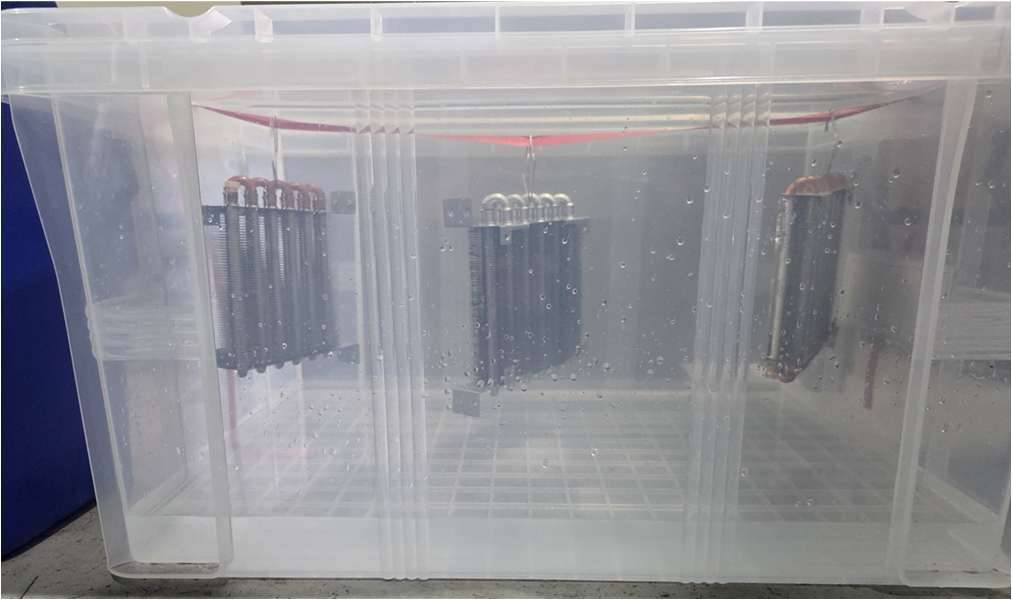
Ammonia resistance was also evaluated on actual heat exchangers. KEMP exposed a HiGANiC Silver-coated heat exchanger to vapor generated from a 28% aqueous ammonia solution for 168 hours. The galvanized steel, copper and aluminium all remained in good condition after exposure.
In the same test, the uncoated heat exchanger developed extensive red rust on its galvanized steel frame and widespread blackening from corrosion on the copper tubes. Localized oxidation was also observed on the aluminium.
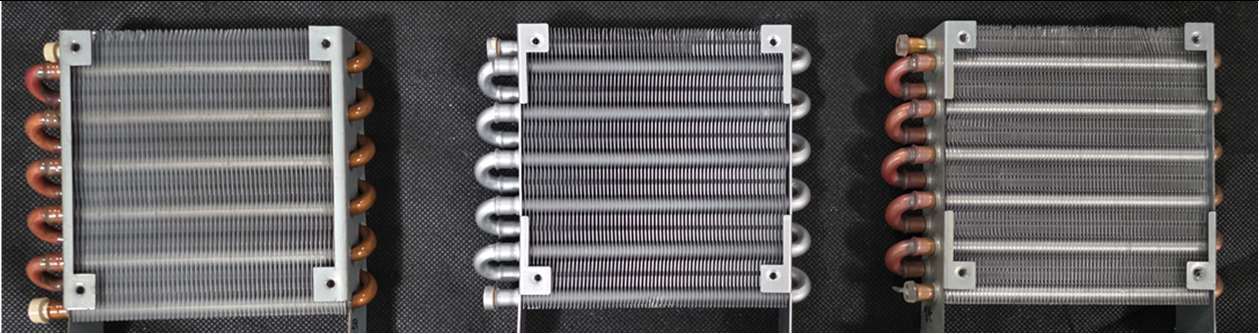
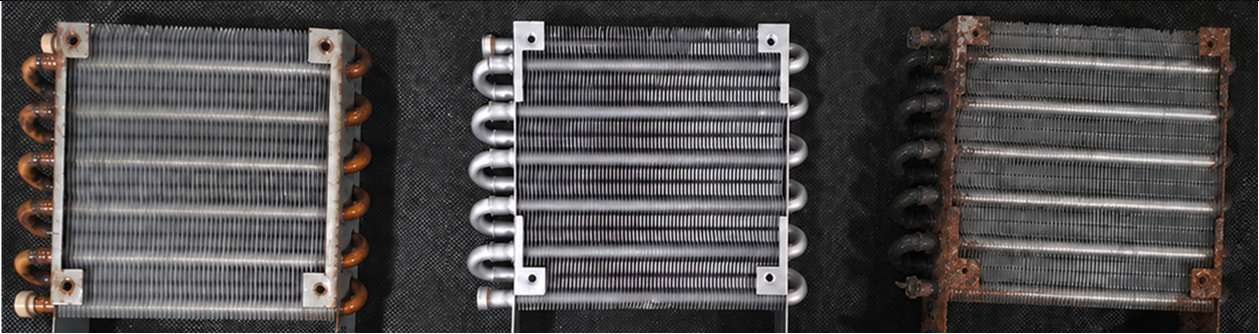
The zinc and aluminium flakes in HiGANiC Silver, together with its organic–inorganic hybrid binder, form a barrier that restricts the penetration of corrosive agents. Protecting the different metals in a heat exchanger with one coating system is particularly relevant to HVAC equipment exposed to salts and corrosive gases.
The following table compares HiGANiC with an overseas coating at the highest performance tier for HVAC coils. SST figures refer to verified test durations for actual heat exchangers.
| Item | KEMP HiGANiC | Leading overseas coil coating |
|---|---|---|
| Coating system | Organic–inorganic hybrid semi-ceramic | Polyurethane with aluminium pigment |
| Verified SST duration on a heat exchanger | Over 6,600 hours Almost no visible surface change | Over 4,000 hours |
| Ammonia resistance | Vapor from 28% aqueous ammonia Good condition after 168 hours · Silver | Vapor from 28% aqueous ammonia 168-hour exposure evaluation |
| Film thickness | 20–25 μm · Silver | 25–30 μm |
| Adhesion | 5B | 5B |
| Initial coating cost | Lower than the overseas comparison product | Overseas premium price range |
Heat exchanger SST, film thickness and adhesion for the overseas product: official published specifications. Test durations are the respective verified ranges.
HiGANiC combines long-term corrosion and ammonia resistance in a thin film. The 20–25 μm film thickness of Silver is equivalent to 0.020–0.025 mm. The application process is controlled to cover the internal and external coil surfaces uniformly while keeping airflow passages between the fins open.
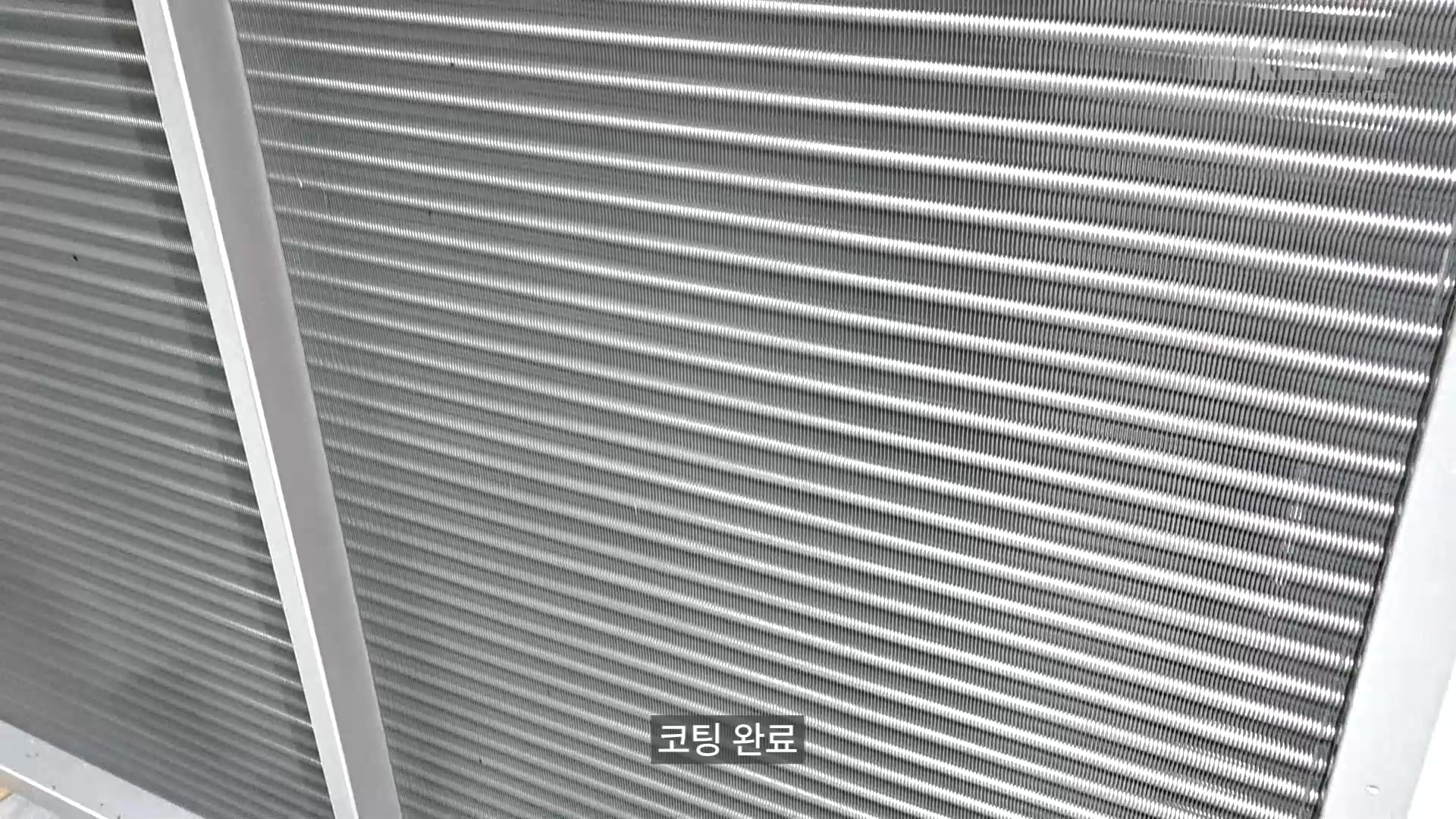
Excessive film thickness or bridging between fins can affect thermal resistance and airflow. Film thickness and coverage uniformity should therefore be assessed alongside corrosion resistance when specifying a coil coating.
In a temperature comparison test using an aluminium LED luminaire, the final temperature difference between coated and uncoated specimens was less than 1°C at all four measurement points, with a maximum difference of 0.7°C. This test examined temperature behavior before and after coating. HVAC coil specifications also take account of fin spacing, airflow and application uniformity.
Epoxy electrocoating developed specifically for coils uses immersion and electrodeposition to form a uniform film on complex metal surfaces. Commercial specifications include film thicknesses of 12.7–30.5 μm and heat transfer loss below 1%. A separate UV-resistant topcoat may be applied where the coating will be exposed to sunlight. Technical specification for epoxy coil electrocoating
HiGANiC’s organic–inorganic hybrid structure brings corrosion resistance, chemical resistance and weatherability into the same coating system. It achieved 5B adhesion and, after 600 hours of accelerated weathering, a color difference of ΔE 0.2 and gloss retention of 99%. HiGANiC coating properties
Every HiGANiC reference held by KEMP represents contract coating performed directly at KEMP’s own factory.
Since 2016, KEMP has built experience in HiGANiC contract coating for air-handling and steam coils. Coils used at the National Information Resources Service, the Korea Institute of Ocean Science & Technology, the semiconductor cleanroom at Korea Maritime & Ocean University, and the medical intensive care unit at Pusan National University Yangsan Hospital were coated by KEMP.
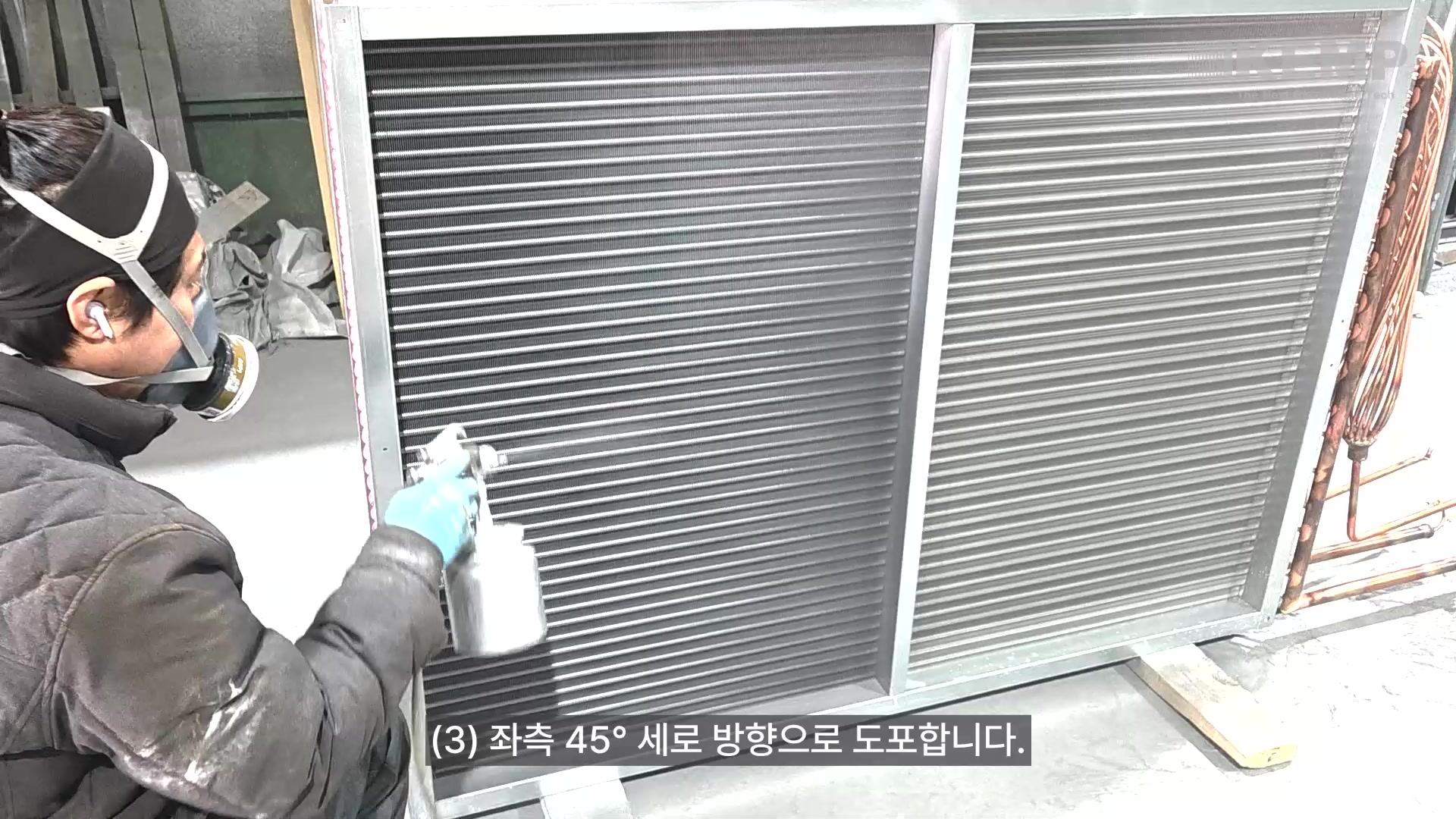
During production, the application direction and access to the surfaces are adjusted to suit coil dimensions, fin spacing and tube arrangement. The coating covers fins, copper tubes and frames, followed by heat curing, cooling, surface inspection and shipment. This manufacturing experience translates coating properties into the quality of the finished coil.
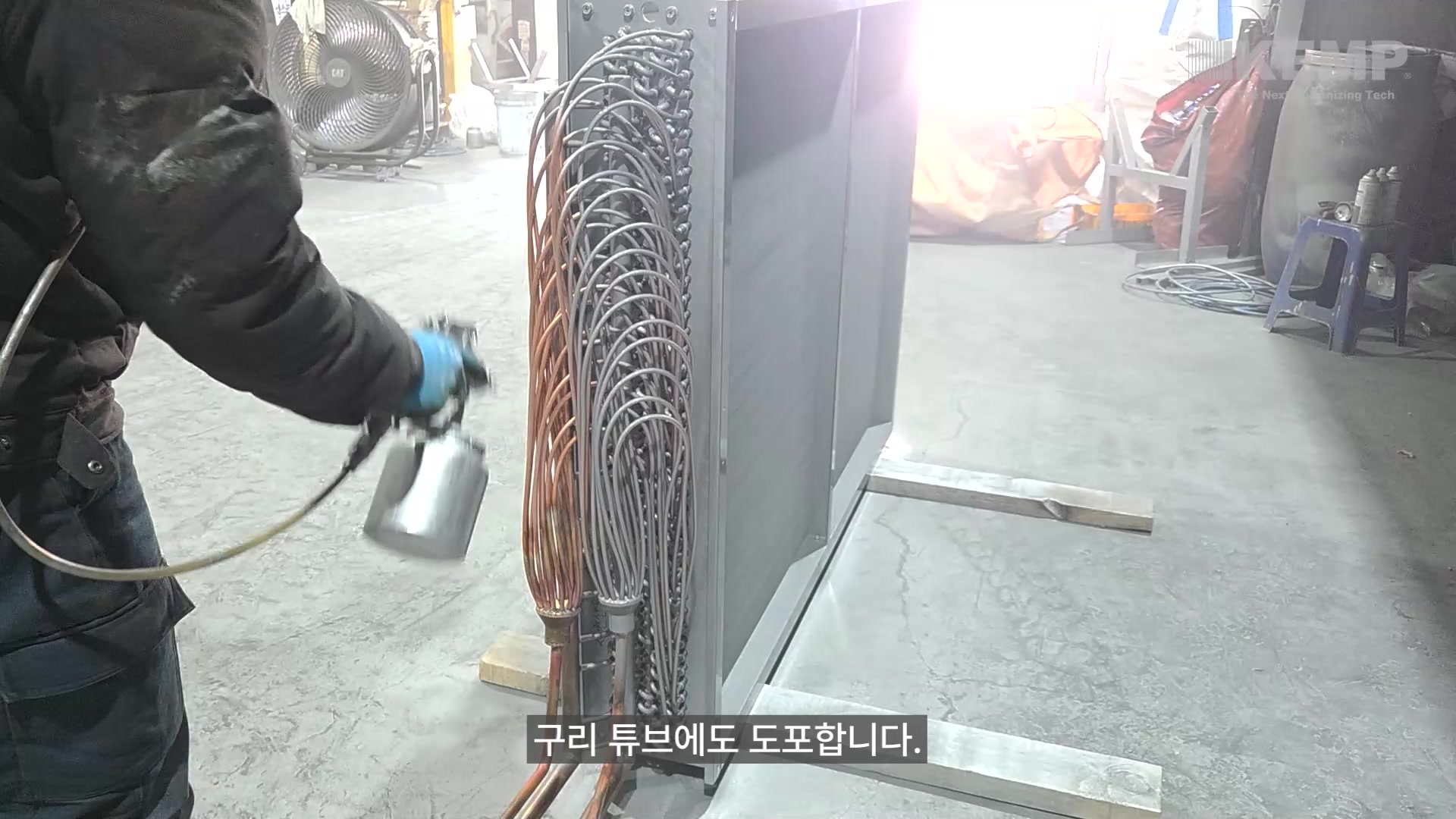
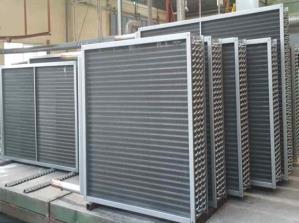
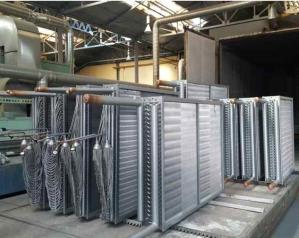
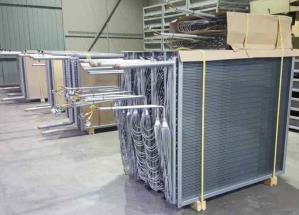
HiGANiC is available as a coating material and as a factory contract coating service. Customers with their own coating facilities can review the material and application process, while customers needing coated, assembled coils can use KEMP’s contract coating service.
Its initial cost is higher than that of general epoxy coatings, but it is competitively priced against overseas premium coil coatings. It offers a way to assess protection performance and initial cost together for equipment requiring long-term corrosion resistance.
The cost of coil protection in a data center extends beyond the initial coating expense to replacement work, operational adjustments and maintenance. Specifying a coating for the equipment’s corrosion environment at an early stage also helps define the maintenance plan.
KEMP reviews coil materials and geometry, site exposure, operating conditions and cleaning practices to propose HiGANiC coating specifications and application processes. Over 6,600 hours of SST on an actual heat exchanger, demonstrated ammonia resistance and direct factory contract coating experience provide the basis for evaluating protection performance and cost for data center cooling equipment.
For an application review, please provide coil photographs or drawings, materials and dimensions, installation environment, required tests and quantities. Discuss HiGANiC coating materials and contract coating
Part 1: Data Center Cable Trays and Threaded Rods — Corrosion Resistance and Assembly Quality

